Message from the Chief Chaplain
Chapels
Rikkyo’s Founding Spirit
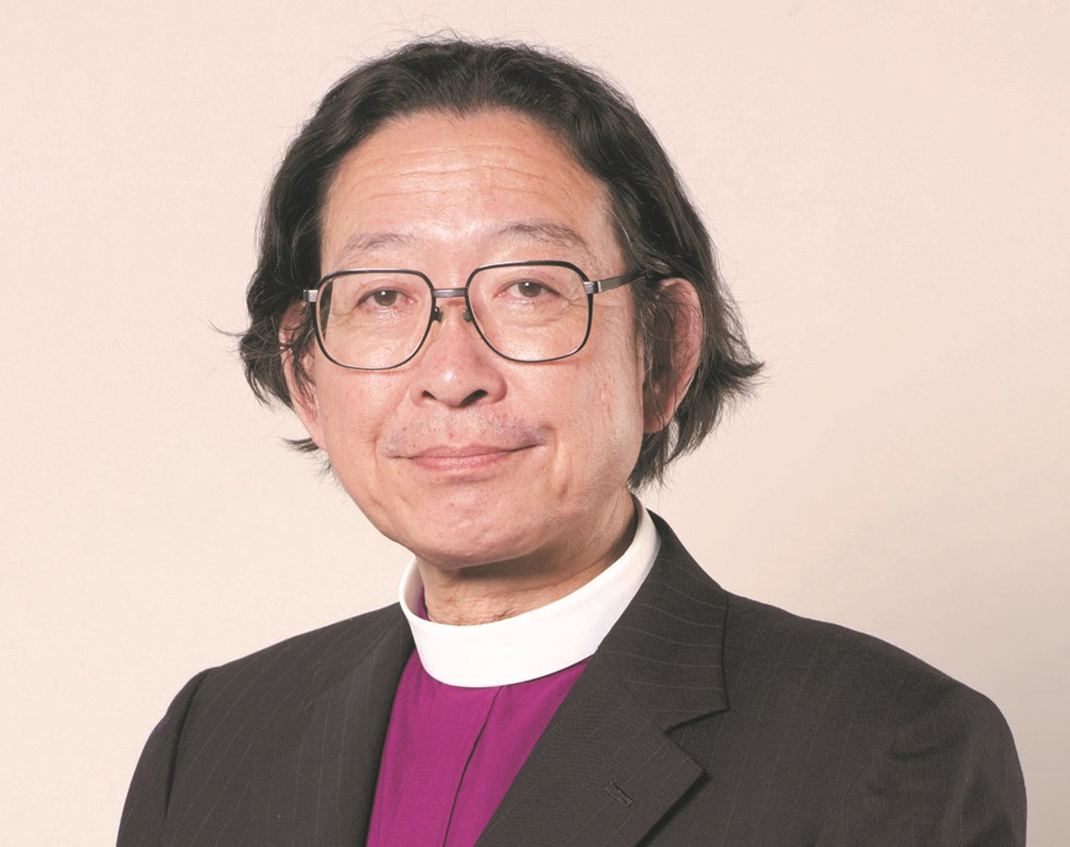
Chief Chaplain Katsuichi Hirota
Yesterday, April 5, was Easter Sunday. I wish you a blessed and joyful Easter. I would also like to extend my sincerest congratulations to all of you who are about to begin your studies at Rikkyo University. I believe that you were able to enter this university not only through your own efforts and abilities but also with the support of your families and many others around you. I hope you will continue to cherish the sense of humility and gratitude you feel today.
Rikkyo University was founded by a missionary who came to Japan from the United States to share a message of truth and love based on biblical teachings. His name was C.M. Williams. He was a clergyman in the Episcopal Church and later become a bishop, which is why we refer to him as Bishop Williams. Precisely 152 years ago, Bishop Williams established a small private school in the foreign settlement of Tsukiji. The school’s first class is said to have consisted of only five or eight students, and it offered lessons in the Bible and English. Known as Rikkyo School, it grew considerably in the years that followed.
The founder, Bishop Williams, not only established the school but also laid the foundations of the Anglican Episcopal Church in Japan. Those who met him were deeply impressed by his humble and noble character. During his 50 years in Japan, he demonstrated an enthusiastic pioneering spirit while remaining modest and refraining from boasting about his achievements. Above all, he devoted his life to glorifying God rather than himself. Before returning home, he shared news of his departure with only a limited number of people. As he sailed away from Japan, he prayed for God’s blessing. His life truly embodied the principle: “Teach the way, not the self.”
You may have sensed something of Rikkyo’s founding spirit during this entrance ceremony. As you entered Tucker Hall, you saw the cross at the front, as well as a cross and the school flag leading the procession. The school flag displayed on the podium features a white cross on a purple background, symbolizing Jesus Christ. The path Jesus followed was one of love: walking alongside those who suffer and struggle. Jesus was crucified by the hostile authorities of his time. Yet, trusting in God, he followed the path of righteousness to the very end and showed others the way.
By walking this way of love and righteousness, Jesus opened for us the way to true freedom. Our school flag represents a spirit that encourages us to follow this path of love and righteousness and to stand firm in the face of whatever difficulties and suffering we may encounter. This was the path that our founder, Bishop Williams, devoted his life to promoting.
Rikkyo University was founded by a missionary who came to Japan from the United States to share a message of truth and love based on biblical teachings. His name was C.M. Williams. He was a clergyman in the Episcopal Church and later become a bishop, which is why we refer to him as Bishop Williams. Precisely 152 years ago, Bishop Williams established a small private school in the foreign settlement of Tsukiji. The school’s first class is said to have consisted of only five or eight students, and it offered lessons in the Bible and English. Known as Rikkyo School, it grew considerably in the years that followed.
The founder, Bishop Williams, not only established the school but also laid the foundations of the Anglican Episcopal Church in Japan. Those who met him were deeply impressed by his humble and noble character. During his 50 years in Japan, he demonstrated an enthusiastic pioneering spirit while remaining modest and refraining from boasting about his achievements. Above all, he devoted his life to glorifying God rather than himself. Before returning home, he shared news of his departure with only a limited number of people. As he sailed away from Japan, he prayed for God’s blessing. His life truly embodied the principle: “Teach the way, not the self.”
You may have sensed something of Rikkyo’s founding spirit during this entrance ceremony. As you entered Tucker Hall, you saw the cross at the front, as well as a cross and the school flag leading the procession. The school flag displayed on the podium features a white cross on a purple background, symbolizing Jesus Christ. The path Jesus followed was one of love: walking alongside those who suffer and struggle. Jesus was crucified by the hostile authorities of his time. Yet, trusting in God, he followed the path of righteousness to the very end and showed others the way.
By walking this way of love and righteousness, Jesus opened for us the way to true freedom. Our school flag represents a spirit that encourages us to follow this path of love and righteousness and to stand firm in the face of whatever difficulties and suffering we may encounter. This was the path that our founder, Bishop Williams, devoted his life to promoting.
I have just spoken about the way of love and righteousness, and I would now like to turn our attention to the school anthem. At the end of this ceremony, you will sing our school anthem, “Glorious Rikkyo.” The anthem was created amid the excitement generated by the university’s entry into the Tokyo Big6 Baseball League. It was exactly 100 years ago, at the commencement ceremony held in March 1926, that the anthem was officially performed for the first time. The phrase “educational institution of freedom” is repeated throughout its stanzas and has been used frequently over the past century to describe Rikkyo’s school spirit.
The first stanza of the anthem reads as follows: “With a distant view of Mt. Fuji, the school buildings of Rikkyo University, an educational institution of freedom, stand majestically on the Musashino Plateau, adorned with purple flowers blooming in profusion.” I hope you will learn to sing this anthem for cheering for our team in the Tokyo Big6 Baseball League at Jingu Stadium and on other occasions. In particular, I would like you to remember the phrase “soul of love, righteous mind,” which appears in the second stanza. These words echo the path of love and righteousness that I mentioned earlier.
Rikkyo’s educational mission is to foster character and promote human development on the foundation of Christianity. One expression of this Christian foundation is the presence of chapels on both of our campuses.
Rikkyo University has two campuses. As you enter the Niiza Campus, the first building to greet you is St. Paul’s Chapel. The large cross at the front of the chapel gives the impression that heaven and earth are joined together there.
The chapel on this Ikebukuro Campus, All Saints Chapel, was built and completed 107 years ago as the third major structure on the campus, following the Main Building and the former library, which is now used as an exhibition hall. As you can see, a chapel stands at the forefront as soon as you enter either of Rikkyo’s campuses. Every day, prayers are offered there for justice and peace in the world, for Rikkyo Gakuin, and for all of you. This is Rikkyo.
During this ceremony, we have offered prayers and heard a reading from the Bible. The word “Amen,” which we say at the end of a prayer, means “truly” or “it is true.” In prayer, we are united. I hope that you will join us in our midday and other prayers and experience the spirit of Rikkyo.
In closing, I encourage all those who have just joined Rikkyo to reflect on what you consider the ultimate purpose of life. Over the next few years of study, I hope you will discover that the purpose of life is to know God, in other words, to pursue universal truth. Jesus said, “I am the Way, the Truth, and the Life”—may you come to know this way, this truth, and this life. I hope that you will be able to find your own purpose in this. The spirit and mind of Bishop Williams are also with us here. Please make the most of this time and place to pursue the truth.
“The truth will set you free.” We pray that God’s abundant blessings and guidance for the future will be upon all of you who have enrolled.
(Excerpt from the address of encouragement at the entrance ceremony on April 6, 2026)
The first stanza of the anthem reads as follows: “With a distant view of Mt. Fuji, the school buildings of Rikkyo University, an educational institution of freedom, stand majestically on the Musashino Plateau, adorned with purple flowers blooming in profusion.” I hope you will learn to sing this anthem for cheering for our team in the Tokyo Big6 Baseball League at Jingu Stadium and on other occasions. In particular, I would like you to remember the phrase “soul of love, righteous mind,” which appears in the second stanza. These words echo the path of love and righteousness that I mentioned earlier.
Rikkyo’s educational mission is to foster character and promote human development on the foundation of Christianity. One expression of this Christian foundation is the presence of chapels on both of our campuses.
Rikkyo University has two campuses. As you enter the Niiza Campus, the first building to greet you is St. Paul’s Chapel. The large cross at the front of the chapel gives the impression that heaven and earth are joined together there.
The chapel on this Ikebukuro Campus, All Saints Chapel, was built and completed 107 years ago as the third major structure on the campus, following the Main Building and the former library, which is now used as an exhibition hall. As you can see, a chapel stands at the forefront as soon as you enter either of Rikkyo’s campuses. Every day, prayers are offered there for justice and peace in the world, for Rikkyo Gakuin, and for all of you. This is Rikkyo.
During this ceremony, we have offered prayers and heard a reading from the Bible. The word “Amen,” which we say at the end of a prayer, means “truly” or “it is true.” In prayer, we are united. I hope that you will join us in our midday and other prayers and experience the spirit of Rikkyo.
In closing, I encourage all those who have just joined Rikkyo to reflect on what you consider the ultimate purpose of life. Over the next few years of study, I hope you will discover that the purpose of life is to know God, in other words, to pursue universal truth. Jesus said, “I am the Way, the Truth, and the Life”—may you come to know this way, this truth, and this life. I hope that you will be able to find your own purpose in this. The spirit and mind of Bishop Williams are also with us here. Please make the most of this time and place to pursue the truth.
“The truth will set you free.” We pray that God’s abundant blessings and guidance for the future will be upon all of you who have enrolled.
(Excerpt from the address of encouragement at the entrance ceremony on April 6, 2026)